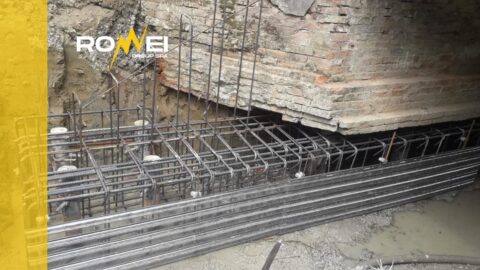
How to Address Structural Settlement, Foundation Problems and Unstable Ground
Cracks, fractures and structural settlement are not always superficial defects. In many cases, they are the visible signs of a deeper problem involving the ground, the foundations or the long-term stability of a structure.
When a residential building, industrial facility, infrastructure or civil engineering structure begins to show signs of movement, understanding the underlying cause is essential before deciding how to intervene. Every situation is different: soil conditions, the existing structure, available working space, site accessibility and the extent of the structural problem can all influence the choice of the most appropriate technical solution.
Structural consolidation is designed to improve or restore the stability of a structure through targeted interventions on foundations and load-bearing elements.
At Romei Group, we specialise in structural consolidation through special foundations, working on civil and industrial buildings as well as infrastructure projects, with technical solutions suitable even for complex sites and restricted working environments.
What Causes Structural Settlement and Cracking?
Structural settlement can have many different causes. The problem does not always originate in the visible part of a building: in many cases, it is related to the ground or to changing conditions that affect the balance between soil, foundations, structural loads and the building itself over time.
Factors that may contribute to cracks, fractures or abnormal structural movement include:
- changes in soil composition or density;
- alternating periods of drought and heavy rainfall;
- groundwater conditions;
- excavation or construction works in surrounding areas;
- nearby buildings and developments;
- leaks from sewer pipes or underground utilities;
- changes in the structural loads over time.
For this reason, when structural settlement occurs, simply examining the visible damage is not enough. A crack is often only the symptom, while the actual cause may lie much deeper.
An effective structural consolidation project therefore begins with understanding the specific conditions of the site and identifying the most appropriate solution for the structure involved.
Ground Improvement or Foundation Consolidation?
Not all consolidation methods are the same.
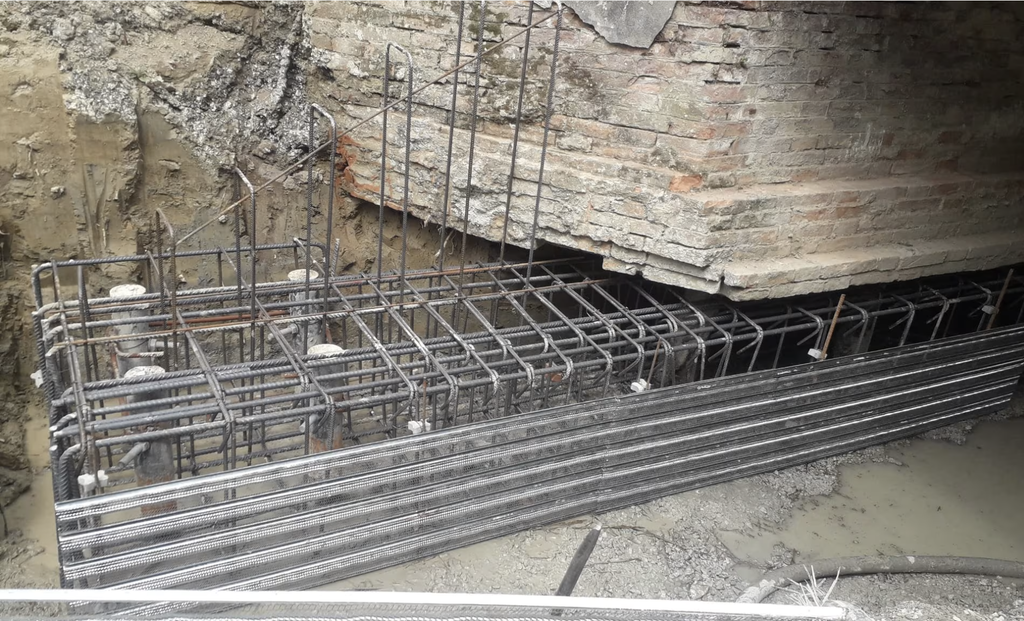
When the problem concerns the foundations or the load-bearing behaviour of the structure, it may be necessary to intervene directly on the foundations with deeper and more permanent structural solutions.
Where foundation performance or bearing capacity is compromised, the consolidation system must be designed to transfer structural loads towards deeper and more stable soil layers.
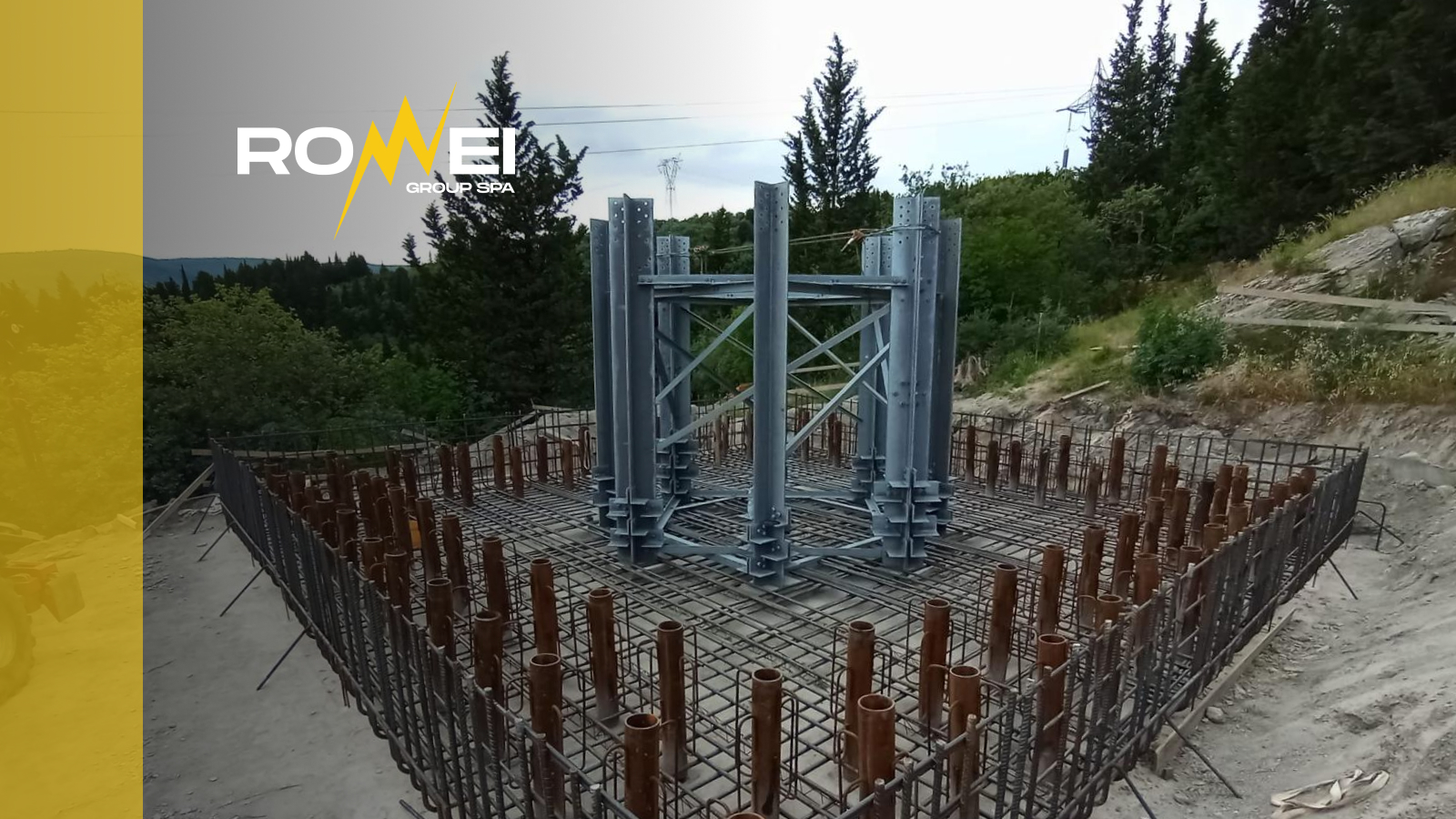
For this reason, many of our projects involve special foundations, drilling, piling, micropiles, ground anchors, underpinning and reinforced concrete works. These solutions are designed to address the structural cause of the problem rather than simply repairing its visible effects.
The objective is not to “cover” a crack, but to address the cause of the settlement and improve the overall stability of the structure.
Micropiles, Ground Anchors and Special Foundations
Micropiles and ground anchors are among the solutions used in structural consolidation when targeted interventions are required on existing foundations, structures, retaining walls, slopes or complex engineering works.
Micropiles can transfer structural loads to deeper, more stable soil layers. They are particularly useful when strengthening existing buildings or when the original foundations are no longer sufficient to provide the required level of stability.
Ground anchors, on the other hand, can be used to stabilise structures, retaining walls and slopes subject to lateral forces or movement. Depending on the project, they may form part of a broader structural consolidation and stabilisation system.
These works may be combined with underpinning, piling, drilling and reinforced concrete structures according to the characteristics of the existing structure and the ground conditions.
Every project requires a specific technical assessment: there is no single solution suitable for every case of structural settlement.
Structural Consolidation in Restricted Spaces
One of the main challenges in structural consolidation is site accessibility.
Projects are not always carried out in large, open or easily accessible areas. Consolidation works often need to be performed inside existing buildings, in basements, in confined environments or in areas where conventional construction machinery cannot operate.
In these situations, compact machinery and specialised equipment become essential.
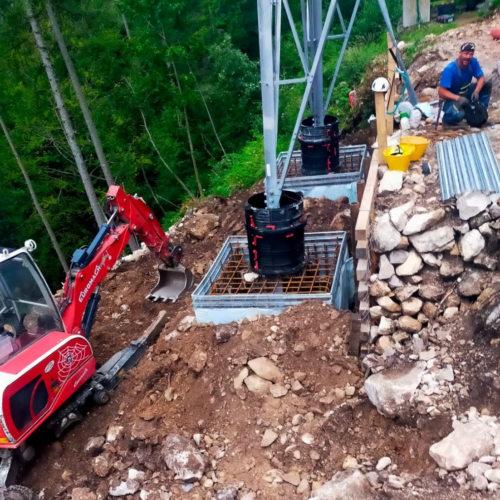
For projects in restricted spaces, we use operational solutions designed specifically for challenging environments, including compact drilling rigs, equipment suitable for indoor drilling, and specialised machinery for micropiles and ground anchors.
This enables us to carry out technically complex consolidation works even where limited access and restricted working space represent major operational constraints.
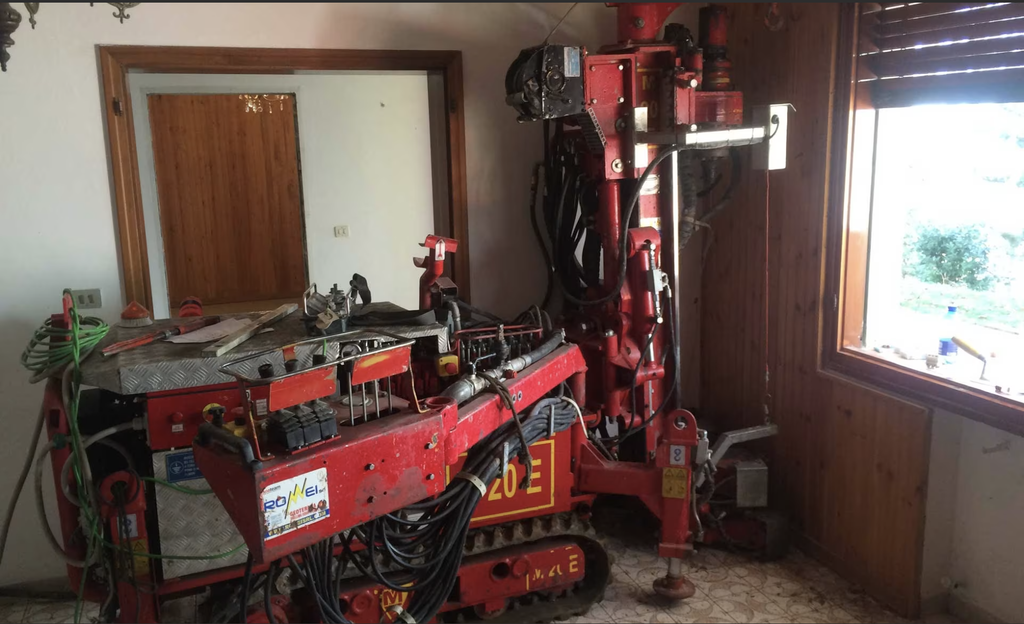
The Role of Specialised Equipment in Structural Consolidation
In structural consolidation, machinery is not simply a construction tool. It is an integral part of the technical solution.
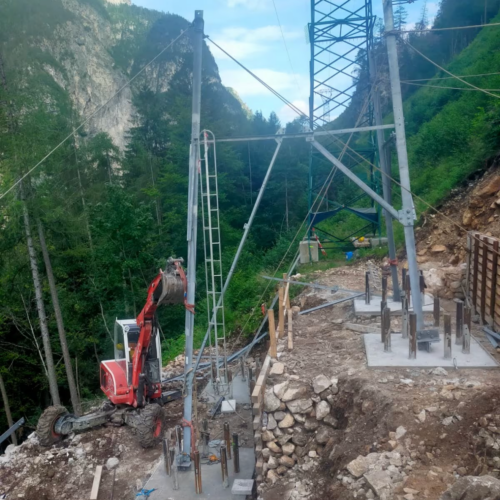
Each project may involve different drilling depths, restricted working areas, difficult access conditions, requirements to minimise vibration and noise, complex material handling or other specific operational constraints.
For this reason, Romei Group has invested over time in specialised machinery and equipment designed for non-standard construction environments.
Our solutions include drilling rigs for restricted spaces, equipment for micropiles and ground anchors, spider excavators, helicopter-transportable machinery and other specialised systems designed to operate in difficult or remote locations.
The ability to select and adapt equipment to the specific conditions of the site helps improve precision, safety and operational efficiency while reducing the logistical challenges associated with complex projects.
Structural Consolidation for Civil, Industrial and Infrastructure Projects
Structural consolidation is not limited to residential buildings.
These interventions may be required on civil buildings, industrial facilities, public works, infrastructure, bridges, viaducts, slopes and other structures affected by settlement or ground movement.
In industrial environments, for example, settlement may affect floors, foundations, production structures or operational areas. In infrastructure projects, structural stability is essential to ensure safety, continuity of service and long-term reliability.
In all these situations, consolidation must be approached from a technical perspective: identifying the problem, selecting the appropriate solution, planning the construction activities, choosing suitable equipment and relying on specialised personnel.
Why a Methodical Approach Matters
Structural settlement should never be underestimated, but neither should it be addressed with improvised solutions.
Focusing exclusively on repairing visible damage can lead to inadequate interventions if the underlying cause has not first been identified. This is why a methodical approach is essential.
A structural consolidation project should include an assessment of visible cracking and other warning signs, an analysis of the structural and geotechnical context, selection of the most appropriate consolidation technique, definition of the operating methods, use of equipment suited to the site conditions and execution by qualified personnel.
Only through this process is it possible to move beyond a superficial repair and implement a genuine structural consolidation solution.
When to Request a Technical Assessment
Cracks, fractures, depressions or unusual structural movements should always be assessed carefully, particularly when they increase over time, reappear after previous repairs or affect important structural elements.
A technical assessment can help determine whether the problem is superficial or whether a deeper intervention involving the foundations or the structure is required.
Every situation must be evaluated within its specific context. A residential building, an industrial facility and an infrastructure project may present completely different challenges and therefore require different technical solutions.
At Romei Group, we approach structural consolidation by combining technical expertise, special foundation solutions, specialised equipment and experience in complex working environments, with the objective of identifying the most appropriate intervention for each project.